AI-Driven Medical Imaging & Diagnostics Lab

News

Congratulations to Puja Saha on Her Successful Master's Defense!

January 20, 2026

We are thrilled to announce the successful master's defense of Puja Saha from the School of Engineering.

🎓 Puja Saha – MASc Graduate

Thesis: Optimizing Differentially Private Federated Learning for Medical Image Segmentation

Puja's thesis focused on developing a privacy-preserving and scalable federated learning framework for medical image segmentation, with methods specifically designed to minimize the privacy-induced trade-off in model performance.

This approach can enable the use of vast amounts of medical data across institutions that often remain under-utilized, to develop robust medical AI models, all while adhering to privacy regulations such as HIPAA, PIPEDA, and GDPR. She evaluated the approach across diverse imaging modalities (2D and 3D), varying levels of complexity, and real-world institutional heterogeneity, demonstrating significantly improved performance compared to conventional differential privacy-based federated learning methods.

Puja will soon be presenting this work at SPIE Medical Imaging in the Computer-Aided Diagnosis track. A journal article is also forthcoming, covering the method's effectiveness under real-world institutional heterogeneity.

We congratulate Puja on her remarkable achievement and her contribution to advancing healthcare and medical AI research. Her dedication, innovative approach, and successful defense are a testament to her hard work and the excellence of our graduate programs. 🎉

Lab Competing in AI4Casting Hub Challenge to Forecast Hospital Bed Occupancy for Respiratory Viruses

December 16, 2025

Our lab is competing in the AI4Casting Hub – Hospital Bed Occupancy Data for Ontario Respiratory Virus Activity (2025-2026) challenge, developing an adaptive ensemble model to forecast COVID-19, Influenza, and RSV hospitalizations across Ontario.

Challenge Overview

AI4Casting Hub is organizing a collaborative nowcasting and forecasting challenge for confirmed hospital bed occupancy during the 2025-2026 influenza season, starting on November 20, 2025. The challenge will run until May 16, 2026. During this period, participating teams are asked to provide weekly probabilistic interval hindcasts, nowcasts and forecasts for hospital bed occupancy at both the provincial level (Ontario) and for each of the 6 Public Health Regions.

These predictions will cover three major respiratory viruses:

  • COVID-19 Hospital Bed Occupancy Count (wk inc covid hosp)
  • Influenza Hospital Bed Occupancy Count (wk inc flu hosp)
  • RSV Hospital Bed Occupancy Count (wk inc rsv hosp)

Predictions will be compared against confirmed hospital bed occupancy data released by Public Health Ontario's Ontario Respiratory Virus Tool. This challenge provides an opportunity to contribute to real-time decision-making and resource allocation for healthcare systems during disease outbreaks.

Get Involved

If you want to participate in this project or have ideas to improve our model for the competition, please reach out to Mohammadreza.

Lab Members to Present Research at CVIS 2025 - 11th Annual Conference on Vision and Intelligent Systems

December 14, 2025

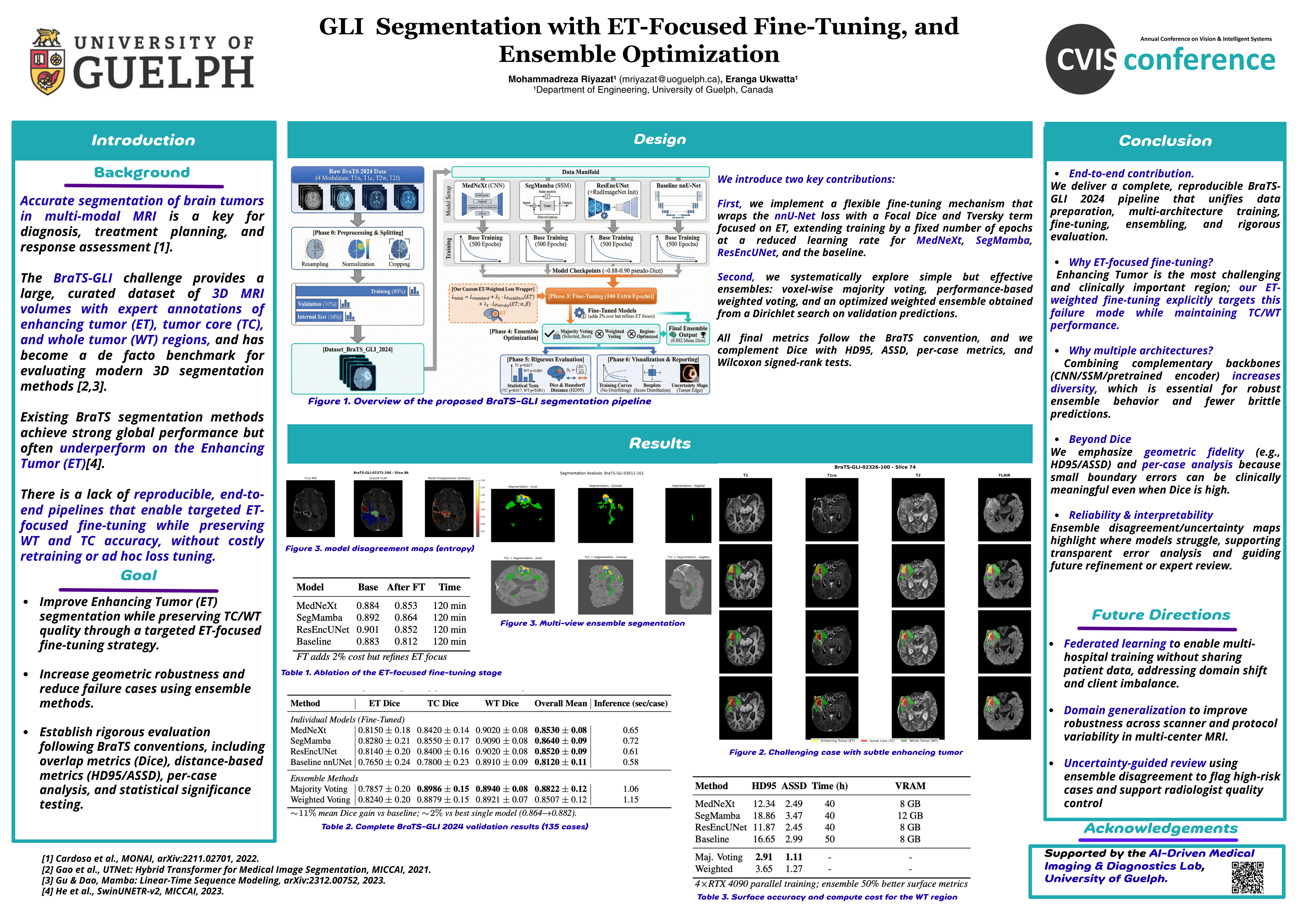
Mohammadreza Riyazat, Zinah Ghulam, and Pramit Dutta will be presenting their research at the 11th Annual Conference on Vision and Intelligent Systems (CVIS 2025) at the University of Waterloo on December 15-16, 2025.

The conference brings together academic and industrial research scientists to share expertise and promote the advancement and application of artificial intelligence, computer vision, and imaging technologies in various areas of academic and industrial interests.

Mohammadreza's Poster for CVIS 2025

Mohammadreza Riyazat CVIS 2025 Poster

Lab Members to Present Research at SPIE Medical Imaging Conference

November 16, 2025

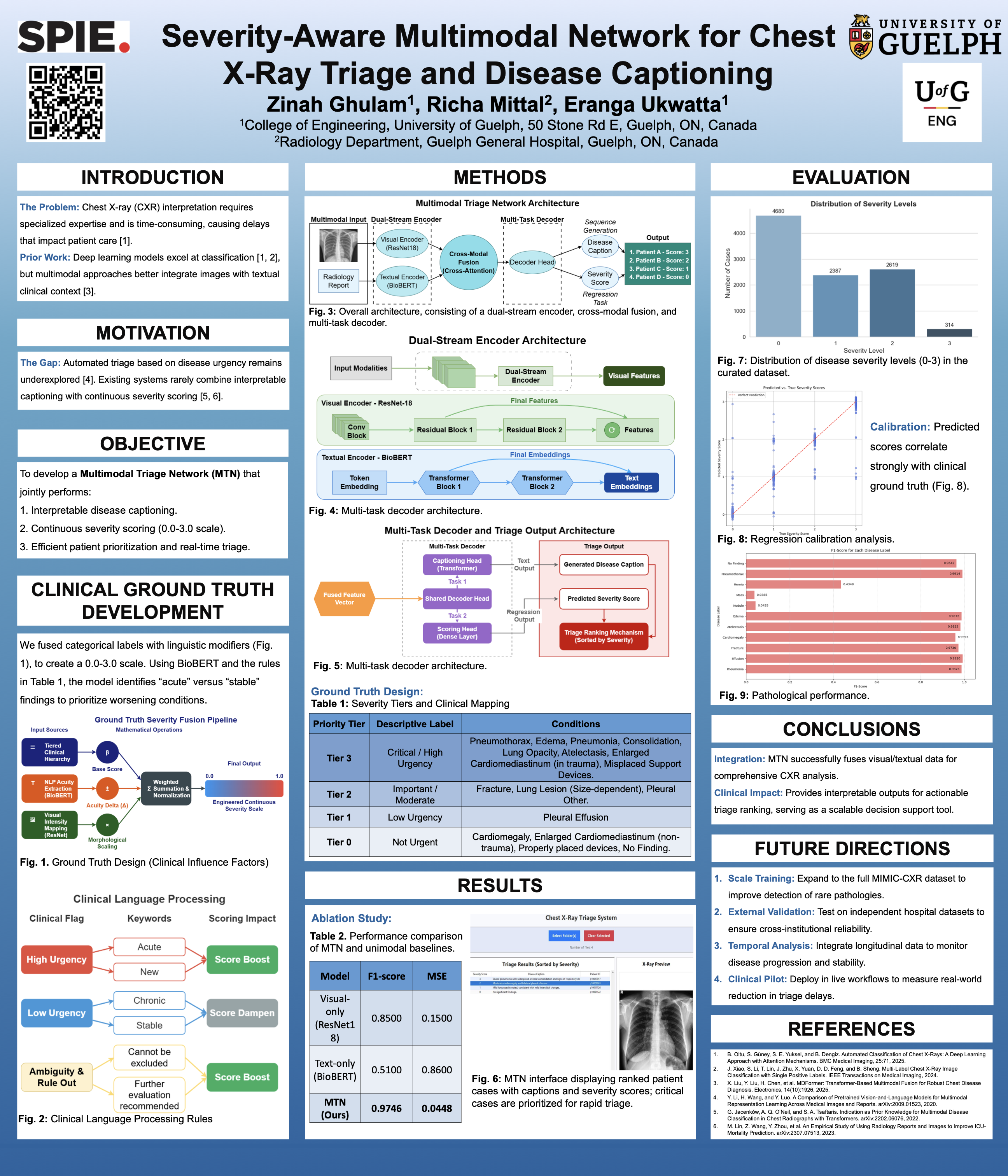
Zachary Szentimrey, Zinah Ghulam, Pramit Dutta, and Puja Saha will be presenting their research at the SPIE Medical Imaging Conference.

Congratulations to Our Graduate Students on Successful Thesis Defenses!

September 10, 2025

We are thrilled to announce the successful defenses of two outstanding graduate students from the School of Engineering.

🎓 Helena Kunic – MASc Graduate

Thesis: Ultrasound Based Evaluation of Knob Modifications in Pessaries for Stress Urinary Incontinence

Defense Date: Wednesday, August 27, 2025, 9:00 AM

Helena's research investigated the effects of modifying the knob angle and size of ring pessaries in treating stress urinary incontinence (SUI). Through in-depth analysis using clinical trials, patient feedback, and ultrasound imaging, she demonstrated improved symptom relief in some women. Additionally, Helena developed a machine learning model to automatically segment key pelvic structures, advancing objective assessment of treatment outcomes.

🎓 Negin Piran Nanekaran – PhD Graduate

Thesis: Deep Learning and Federated Learning for Prostate Cancer Classification and Recurrence Prediction

Defense Date: Thursday, September 4, 2025, 1:30 PM

Negin addressed key challenges in medical imaging and predictive oncology. Her dissertation developed a deep learning framework for predicting 5-year biochemical recurrence in prostate cancer patients and introduced a novel federated learning approach for multi-institutional MRI data analysis. Her methods demonstrated superior prediction accuracy, privacy-preserving efficiency, and potential for broad clinical application.

We congratulate Helena and Negin on their remarkable achievements and their contributions to advancing healthcare and medical AI research. Their dedication, innovative approaches, and successful defenses are a testament to their hard work and the excellence of our graduate programs. 🎉

AI Improving Radiation Treatment Planning for Dogs with Cancer

May 12, 2025

AI Radiation Treatment Research

Dr. Eranga Ukwatta, Associate Professor, School of Engineering

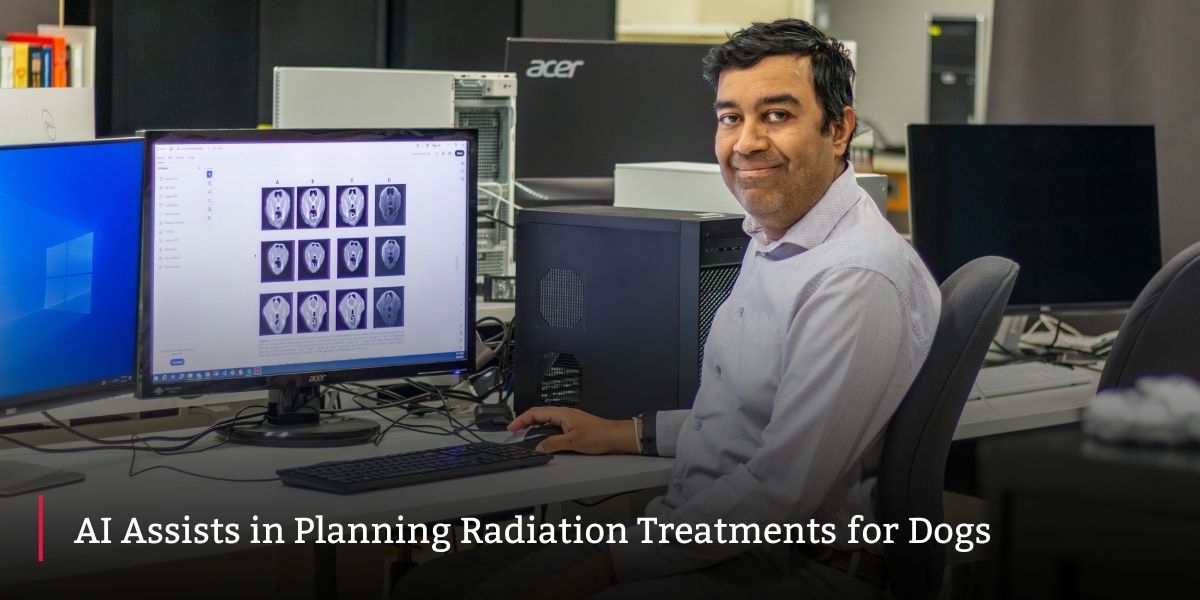
University of Guelph - College of Engineering Professor Dr. Eranga Ukwatta and team, including graduate student Nicola Billings and researchers in Ontario Veterinary College, University of Guelph, are using artificial intelligence to improve radiation treatment planning for dogs with cancer.

The team is using neural networks to generate realistic, pseudo-CT images from MRI image data. If AI-generated CT images can match the diagnostic accuracy of real CT scans, veterinarians could use MRI data to create CT-like images without costly testing or exposing animals to unnecessary radiation and sedation.

"Future studies should focus on optimizing the models for different dog breeds, validating evaluation scales, and exploring methods to reduce errors for improved clinical applicability in radiation therapy planning," says Ukwatta.

Read More

AI Method to Analyze Ultrasound Images for Brain Conditions in Newborns

January 15, 2025

AI Ultrasound Analysis Research

Zachary Szentimrey developing AI tool to help diagnose brain hemorrhaging in babies

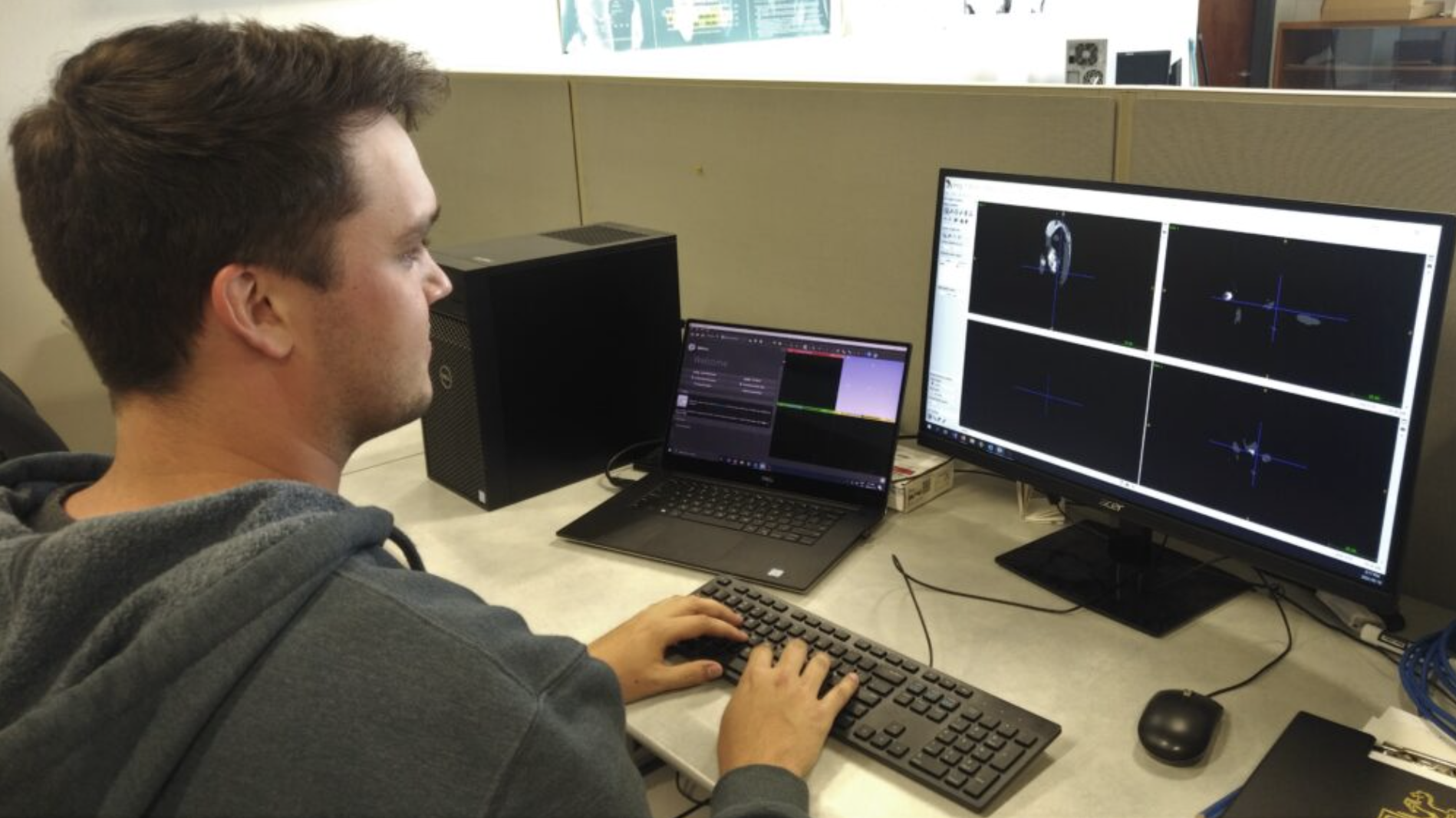
#UofG researchers have developed an AI method to analyze ultrasound images, potentially leading to quicker and more accurate diagnoses of serious brain conditions in newborn and premature infants.

"By using AI to analyze ultrasound images, we can get faster and more accurate results without subjecting the baby to uncomfortable or potentially risky procedures. This can lead to earlier intervention and better outcomes for these fragile patients."

Read More